
When Knee Pain Becomes Too Much
Chronic knee pain can make everyday activities – walking, climbing stairs, even sleeping – feel like a challenge. At Southwest Michigan Center for Orthopaedics & Sports Medicine in St. Joseph, Michigan, our orthopaedic surgeons help patients find lasting relief through advanced knee replacement procedures.
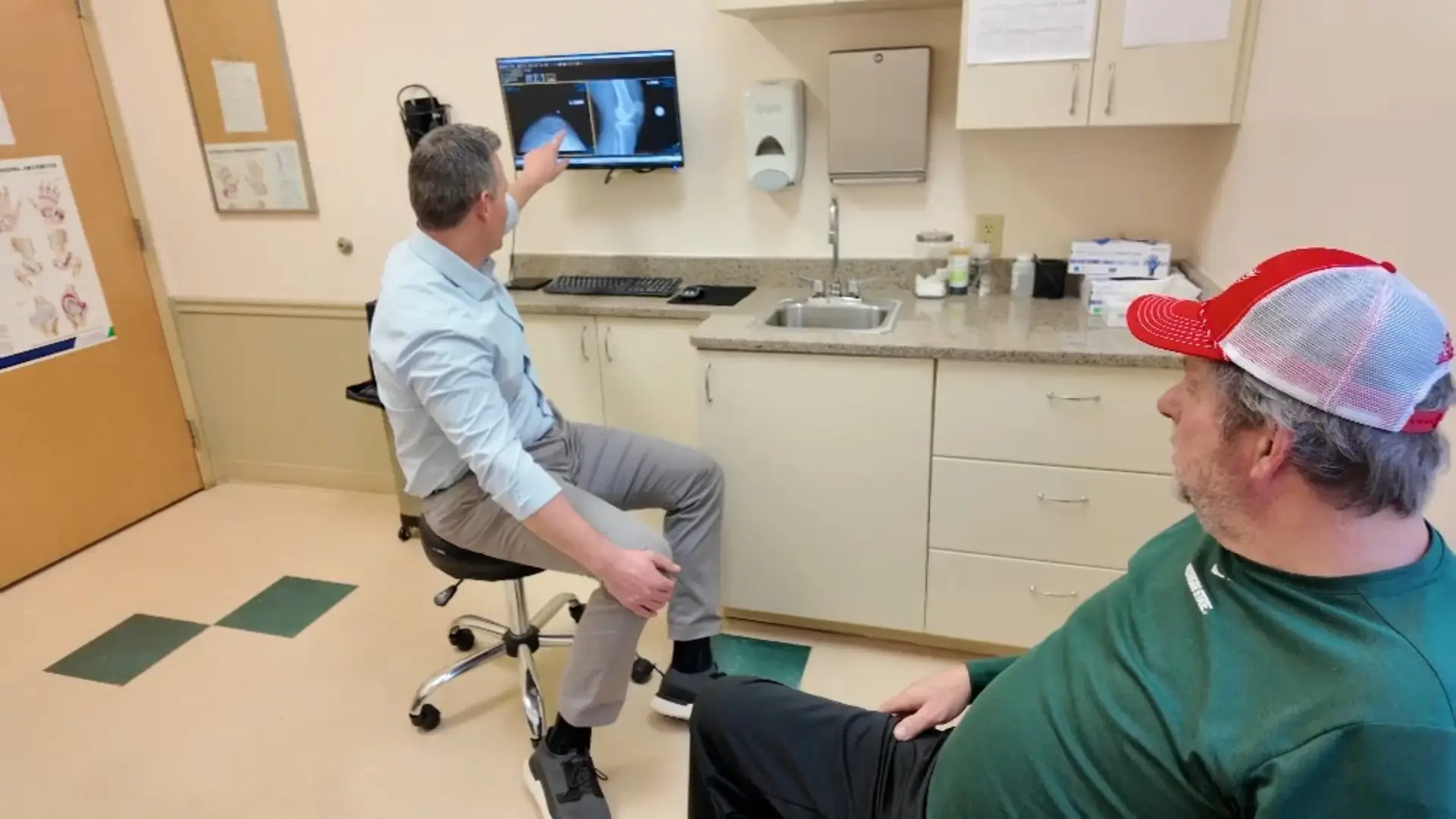
If your doctor has recommended knee replacement, you may be wondering: Do I need a total or partial knee replacement? Understanding the difference can help you make the best choice for your health and lifestyle. SWM Ortho’s Dr. Joseph Farber, MD, explains in this video.
What Is a Partial Knee Replacement?
A partial knee replacement (sometimes called a unicompartmental knee replacement) is an option when damage is limited to one part of the knee – usually caused by early or localized arthritis.
Instead of replacing the entire joint, the surgeon replaces only the damaged section of cartilage and bone with a small implant. The healthy bone, cartilage, and ligaments are left intact, preserving much of your natural knee function.
Benefits include:
- Smaller incision and less tissue disruption
- Faster recovery and rehabilitation
- More natural knee motion after healing
However, it’s only suitable if arthritis or damage affects just one area of the joint. If other parts of the knee show wear, a total knee replacement may be more effective.
What Is a Total Knee Replacement?
A total knee replacement involves resurfacing all three compartments of the knee joint – the inside, outside, and front surfaces – using durable metal and plastic components.
This option is best for patients with advanced arthritis, significant joint deformity, or damage across multiple areas of the knee.
Benefits include:
- Comprehensive pain relief
- Long-lasting results (15–20 years or more in many cases)
- Improved stability and alignment
SWM Ortho’s surgeons use advanced techniques, including minimally invasive approaches and computer-assisted alignment, to ensure precision and help speed recovery.
Which Option Is Right for You?
Your orthopaedic surgeon will recommend the best option based on:
- The extent of joint damage visible on imaging
- Your age, activity level, and overall health
- The location and severity of your pain
In many cases, your doctor may start with conservative care – like physical therapy or injections – before considering surgery. But if pain and stiffness persist, partial or total knee replacement can provide the lasting relief you need.
Knee Replacement Care in St. Joseph, Michigan
At Southwest Michigan Center for Orthopaedics & Sports Medicine, our surgeons perform both partial and total knee replacements regularly, helping patients across Southwest Michigan return to active, pain-free living.
Whether you need a single-compartment repair or a full joint replacement, our team will help you understand your options and design a personalized recovery plan.
Ready to take the next step?
Schedule a consultation with one of our orthopaedic specialists in St. Joseph, MI.
Contact Our Team to get started.