
Carpal Tunnel Syndrome & Surgery | SWM Ortho
Carpal Tunnel Syndrome: Symptoms, Treatment & When Surgery May Help
 Contributing orthopaedic specialist: Nicholas Loafman, DO
Waking up with numb or tingling fingers? Finding it difficult to grip your steering wheel, hold your phone, or complete everyday tasks?
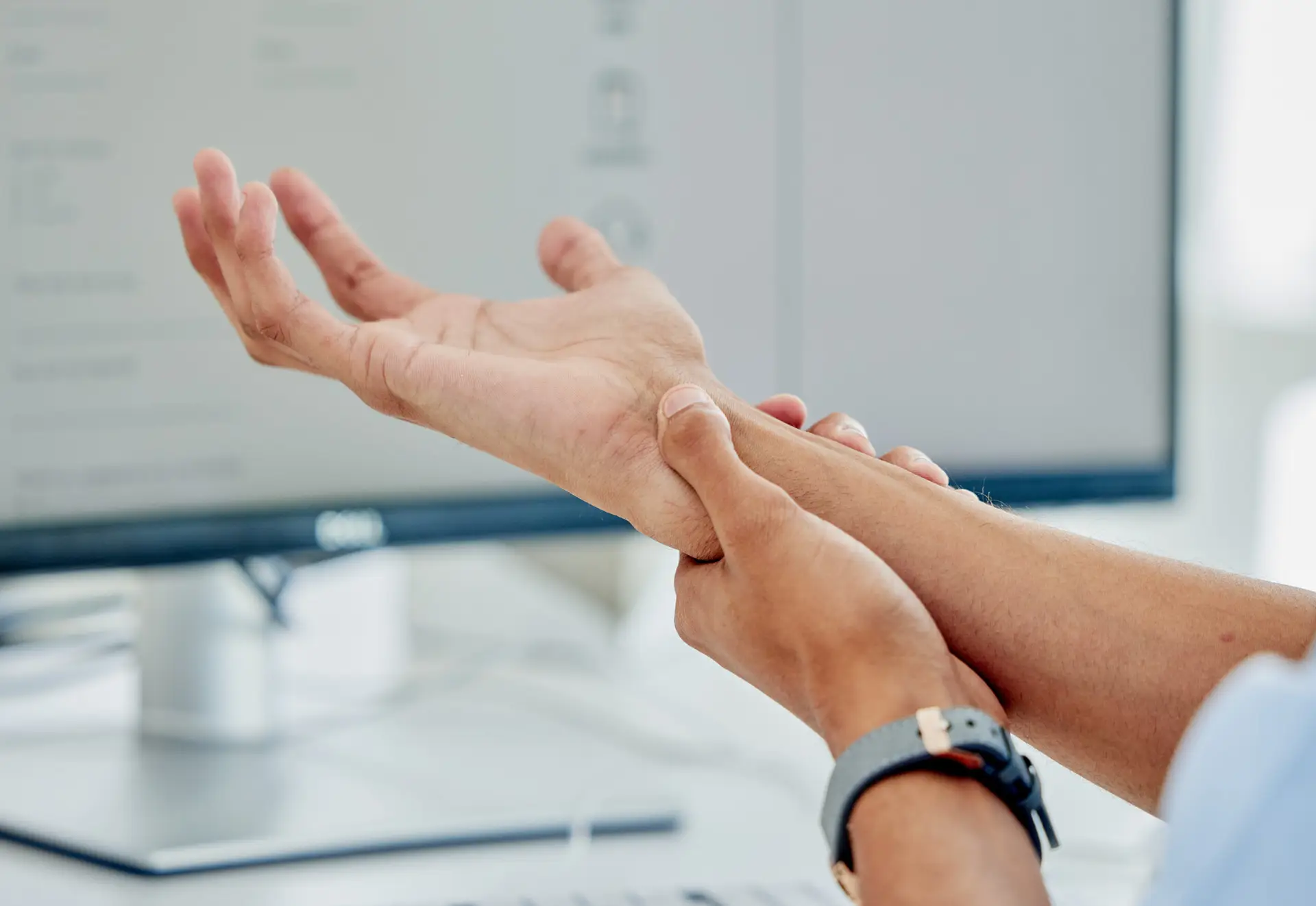
These symptoms are easy to dismiss at first. But when hand discomfort becomes persistent or begins interrupting your sleep, it may be a sign of carpal tunnel syndrome, a common condition affecting the median nerve in the wrist.
At Southwest Michigan Center for Orthopaedics & Sports Medicine (SWM Ortho), our orthopaedic specialists help patients identify the causes of hand and wrist symptoms and understand their treatment options, including carpal tunnel release surgery when appropriate.
What Is Carpal Tunnel Syndrome?
Carpal tunnel syndrome develops when the median nerve becomes compressed as it travels through a narrow passageway in the wrist known as the carpal tunnel.
The median nerve provides sensation to the thumb, index finger, middle finger, and part of the ring finger. It also helps control certain muscles near the base of the thumb.
When pressure on the nerve increases, patients may experience tingling, numbness, discomfort, or weakness that makes ordinary activities more difficult.
Symptoms may develop gradually and can become more persistent over time.
What Are the Common Symptoms of Carpal Tunnel Syndrome?
Carpal tunnel syndrome can affect people differently, but several symptoms are particularly common:
Numbness or tingling: Often affecting the thumb, index finger, middle finger, and part of the ring finger.
Nighttime discomfort: Symptoms may wake patients from sleep or lead them to shake their hands to find relief.
Difficulty gripping objects: Everyday tasks such as opening containers or holding a phone may become more challenging.
Hand weakness: In more advanced cases, weakness can affect thumb function and the ability to hold objects securely.
Pain or discomfort: Symptoms may be felt in the wrist and hand and sometimes extend into the forearm.
Because other conditions can cause similar symptoms, an accurate diagnosis is important before beginning treatment.
What Causes Carpal Tunnel Syndrome?
Carpal tunnel syndrome develops when pressure increases around the median nerve at the wrist.
Several factors may contribute to the condition, including wrist anatomy, inflammatory conditions, diabetes, pregnancy-related fluid changes, and other medical or occupational factors.
Repetitive or sustained wrist positions may aggravate symptoms, although carpal tunnel syndrome is not always caused by repetitive activity.
An orthopaedic evaluation can help determine whether the median nerve is involved and identify other possible causes of hand numbness or weakness.
Can Carpal Tunnel Syndrome Be Treated Without Surgery?
Surgery is not always the first treatment option.
Depending on the severity of symptoms and the extent of nerve compression, an orthopaedic specialist may recommend conservative measures such as:
Wearing a wrist splint, particularly at night
Modifying activities that aggravate symptoms
Addressing contributing medical conditions
Considering corticosteroid injections when appropriate
Treatment begins with understanding the cause and severity of your symptoms. Learn more about the nonsurgical orthopaedic treatment options available at SWM Ortho.
The effectiveness of nonsurgical treatment varies. If symptoms continue, worsen, or involve significant nerve dysfunction, surgical treatment may become an important consideration.
How Does Carpal Tunnel Release Surgery Work?
Carpal tunnel release surgery is designed to reduce pressure on the median nerve.
During the procedure, the surgeon divides the transverse carpal ligament, which forms the roof of the carpal tunnel. Releasing this ligament creates more space for the compressed nerve.
The goal is to prevent continued nerve compression and help reduce symptoms such as numbness, tingling, and weakness.
Carpal tunnel release can be performed through different surgical approaches. Your surgeon will determine which technique is appropriate based on your condition and individual needs.
Watch Dr. Nicholas Loafman Explain Carpal Tunnel Release Surgery
In the following video, Dr. Nicholas Loafman, DO, an orthopaedic surgeon at Southwest Michigan Center for Orthopaedics & Sports Medicine, explains how carpal tunnel release surgery is intended to relieve pressure on the median nerve.
For patients experiencing persistent hand symptoms, understanding how nerve compression develops and how surgery addresses it can be an important part of making an informed treatment decision.
What Can You Expect After Carpal Tunnel Release Surgery?
Recovery depends on several factors, including the severity and duration of nerve compression, the surgical technique used, and the patient's general health.
Some patients notice improvement in nighttime tingling relatively soon after surgery. Others may experience a more gradual improvement in sensation and strength.
Patients with severe or longstanding nerve compression may have incomplete recovery, particularly if permanent nerve damage has already developed.
Your orthopaedic surgeon will provide individualized instructions for wound care, hand movement, activity restrictions, and returning to normal routines.
Following those instructions is an important part of recovery.
Frequently Asked Questions About Carpal Tunnel Syndrome
Can carpal tunnel syndrome go away on its own?
Some mild symptoms may improve with activity modifications, wrist splinting, or changes in contributing conditions. However, persistent or worsening symptoms should be evaluated, particularly when weakness or constant numbness develops.
Which fingers are affected by carpal tunnel syndrome?
Carpal tunnel syndrome commonly affects the thumb, index finger, middle finger, and thumb-side portion of the ring finger. Symptoms involving primarily the little finger may suggest a different nerve condition.
How do I know if I need carpal tunnel surgery?
Surgery may be considered when symptoms persist despite nonsurgical treatment or when testing and examination reveal significant nerve compression, persistent numbness, or weakness. Your surgeon will discuss the benefits and risks based on your particular condition.
Is carpal tunnel release surgery painful?
The procedure is typically performed with anesthesia to control discomfort. Temporary soreness, swelling, or tenderness around the incision may occur during recovery. Your care team will discuss pain management and postoperative expectations.
How long does recovery take after carpal tunnel release?
Recovery varies. Many patients gradually resume light daily activities, but improvement in grip strength and nerve-related symptoms can take weeks or months. Your surgeon will explain when specific work, lifting, and recreational activities may be resumed.
When Should You Seek an Orthopaedic Evaluation?
If numbness, tingling, or weakness is repeatedly interrupting your sleep or interfering with daily activities, it may be time to seek an evaluation.
Persistent loss of sensation or progressive weakness deserves particular attention because prolonged nerve compression can sometimes lead to lasting damage.
At SWM Ortho, our orthopaedic specialists provide personalized evaluation and treatment for conditions affecting the wrist, hand, shoulder, and elbow.
Explore our Shoulder & Upper Extremity services to learn more about the conditions and procedures treated by our team.
Find Answers for Persistent Hand Numbness and Tingling
You don't have to continue guessing about the cause of your symptoms.
Whether you're exploring nonsurgical treatment or wondering if carpal tunnel release may be appropriate, an orthopaedic consultation is the first step toward understanding your options.
Ready to discuss your symptoms with an orthopaedic specialist?
Request an Orthopaedic Consultation at SWM Ortho
Complete our secure online appointment request and patient registration form, or call (269) 428-3500 to connect with our office.
Southwest Michigan Center for Orthopaedics & Sports Medicine - St. Joseph, Michigan. Providing personalized orthopaedic care for patients throughout Southwest Michigan.

Dr. Nicholas Loafman, DO
Orthopaedic Surgeon
"Practicing in a smaller community changes the patient-doctor relationship in meaningful ways. You see your patients, you see their families out and about, and you get to know them on a much more personal level than just as a surgical patient. It's a good community feel to me."

Dr. Joseph Farber, MD
Orthopaedic Surgeon
"Orthopaedic care is about improving quality of life. Everyday we help people move without pain and return to what matters most to them. I like taking care of people and having those interactions. I'm making a little difference every day and I really like what I do."

Dr. Daniel G. Sohn, MD
Orthopaedic Surgeon
"I always wanted to make a significant change in someone's life. Medicine offers many ways to help, but orthopaedics is special because it often restores function quickly. When joint damage, injury, or arthritis prevents a person from returning to daily life or work, orthopaedics can be transformative."

Dr. Justin Sybesma, MD
Orthopaedic Surgeon
"Beyond fixing bones and ligaments, this work heals spirits. Seeing a patient light up after recovering from chronic pain, or after their life was suddenly disrupted, is one of the most meaningful parts of being an Orthopaedic Surgeon."

Dr. Josiah Valk, DO
Orthopaedic Surgeon
"I was always drawn to musculoskeletal medicine but it was my first experience in the operating room that changed everything. I really fell in love with surgery and from there orthopedics was an easy choice. Being an an Orthopaedic Surgeon allows me to perform a wide array of procedures and focus on helping patients recover quickly and safely. That mix of technical challenge and meaningful patient impact is what keeps me motivated."