
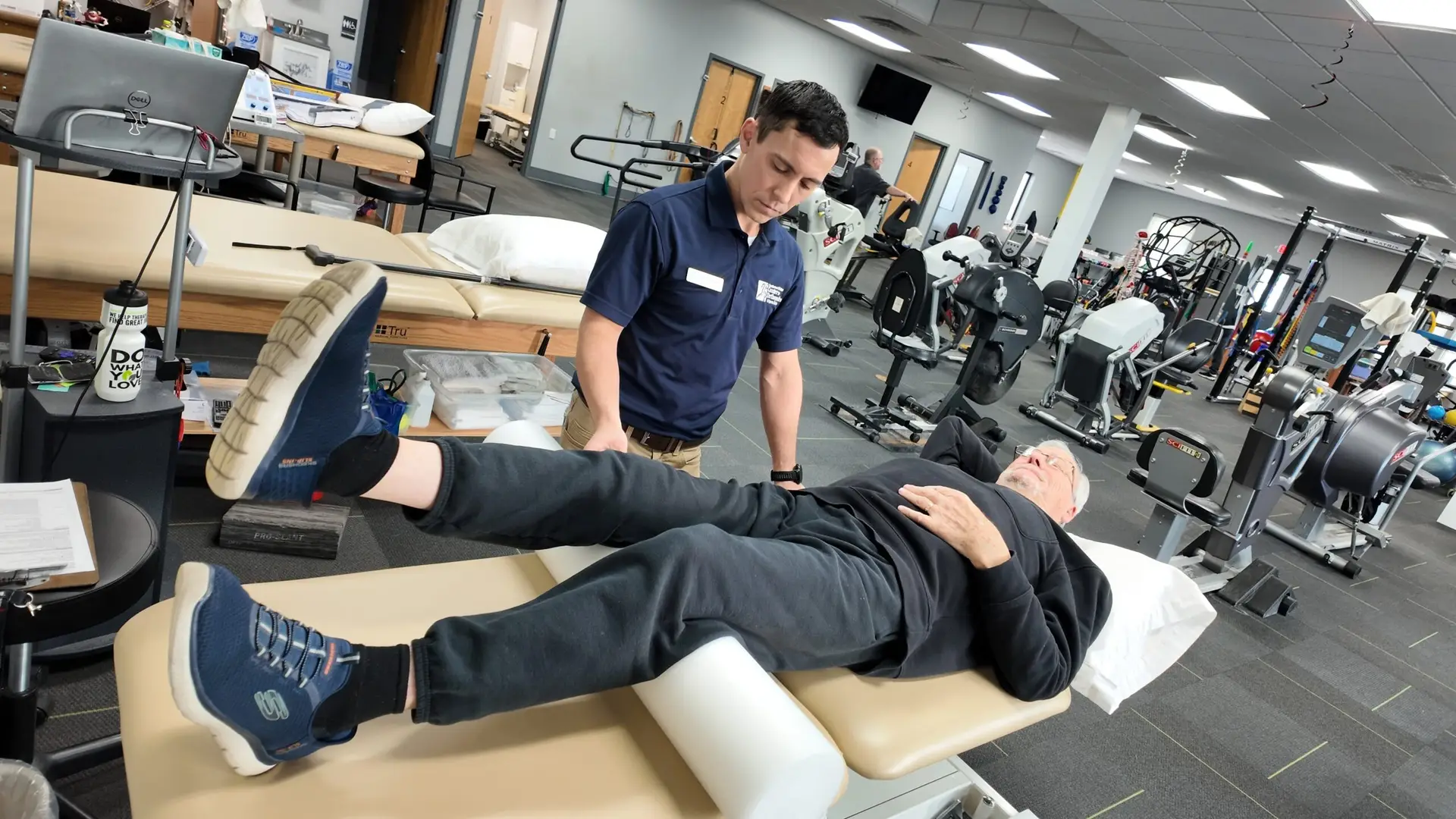
William Rohm raced motorcycles for years. Now he spends his weekends trail riding up north in Michigan. Trail riding is different from casual riding—you don’t sit back and let the bike absorb everything. You stand, you squat, and your legs become an active part of the suspension system. After decades of letting his knees take the hits, Bill needed a Total Knee Replacement.
Why knees wear out in active riders
When you stand on a bike, your knees and legs take repeated impacts from rocks, roots, and uneven terrain. Over time that constant stress can cause:
- Worn cartilage and arthritis
- Instability and popping in the knee joint
- Pain that affects daily life and work
“Your suspension is not just in the wheels, but it’s in your legs.”
William Rohm – Patient
That about sums it up. Legs are part of the shock absorption system, and they pay the price.
Deciding on a Total Knee Replacement
 Before his total knee replacement, William already had both hips replaced from similar wear and tear. When his knees started to pop out with simple movements, it was clear the time had come. A few practical tips for anyone considering a knee replacement:
- Get a thorough assessment from a Southwest Michigan Center for Orthopaedics & Sports Medicine Orthopaedic Surgeon – X-rays, physical exams, and a detailed history matter.
- Ask about implant material. William received a titanium implant, which is durable and widely used.
- Discuss which kind of knee replacement is best for you. Partial or Total could be chosen based on your age and condition.
What a complete knee replacement involves
Complete knee replacement means the orthopaedic surgeon replaces the damaged surfaces of the knee joint with prosthetic components. The goal is to restore alignment, stability, and a pain-free range of motion so you can return to active pursuits.
Rehab: the make-or-break phase
Physical therapy is critical. After William’s surgery, the quality of rehab made a huge difference. Good physical therapy does more than strengthen muscles – it teaches you how to use the joint correctly so it lasts longer.
Key elements of successful rehab:
- Early movement to prevent stiffness
- Progressive strengthening of quadriceps and hamstrings
- Balance and proprioception exercises to protect against future injury
- Clear communication with your therapist about goals—returning to everyday tasks or specific activities like trail riding
Choosing the right team

Pick a surgeon and therapy team who listen. William says his surgeon, Southwest Michigan Center for Orthopaedics & Sports Medicine’s Dr. Andrew Kutzner, MD, did an outstanding job on the knee replacement – and SWMOrtho’s physical therapy staff were caring, supportive, conversational, and practical. That human connection matters during recovery.
“You don’t want to go anywhere else. They are just really great people.”
William Rohm – Patient
Questions to ask your care team
- How many Total Knee Replacement procedures have you done?
- What implant do you recommend and why?
- What will the rehab schedule look like, and who will guide it?
Getting back to the trails
After recovery, William looks forward to getting back on the trails again. It’s not just about fixing a joint; it’s about regaining confidence and learning to protect your knees by using proper technique – standing when needed, letting your legs absorb shock appropriately, and not overdoing it early in recovery.
If you’re facing a Total Knee Replacement, know that with the right surgeon, a durable implant like titanium, and committed physical therapy, you can get back to the activities you love. William’s knees took a beating for years, but with thoughtful care he’ll be back out on Michigan trails – enjoying the ride.
Contact Our Team of Orthopedic Surgeons |
|
|
| Schedule Your Consultation |