
Our Orthopedic Surgeons Explain the Warning Signs
A broken bone needs prompt attention, but certain symptoms make it an emergency. Knowing these red flags can help protect the affected limb from infection, nerve damage, or problems with blood flow. One of our trained Orthopedic Surgeons at Southwest Michigan Center for Orthopaedics & Sports Medicine will look closely at the skin, sensation, color, and temperature around a suspected fracture to determine how urgently it needs treatment. Dr. Josiah Valk, DO, explains three warning signs that deserve immediate attention in this video.
1. Bone Breaking Through the Skin or a Wound Over the Fracture
If a bone is sticking out through the skin or has poked through it, seek urgent emergency care. This is considered an open fracture, and it carries a serious risk of infection.
The skin injury is not always dramatic. Sometimes there may only be a small puncture wound, scrape, or abrasion near where the fracture occurred. Even a tiny opening over the injured area matters because bacteria may have a path to the bone and deeper tissues.
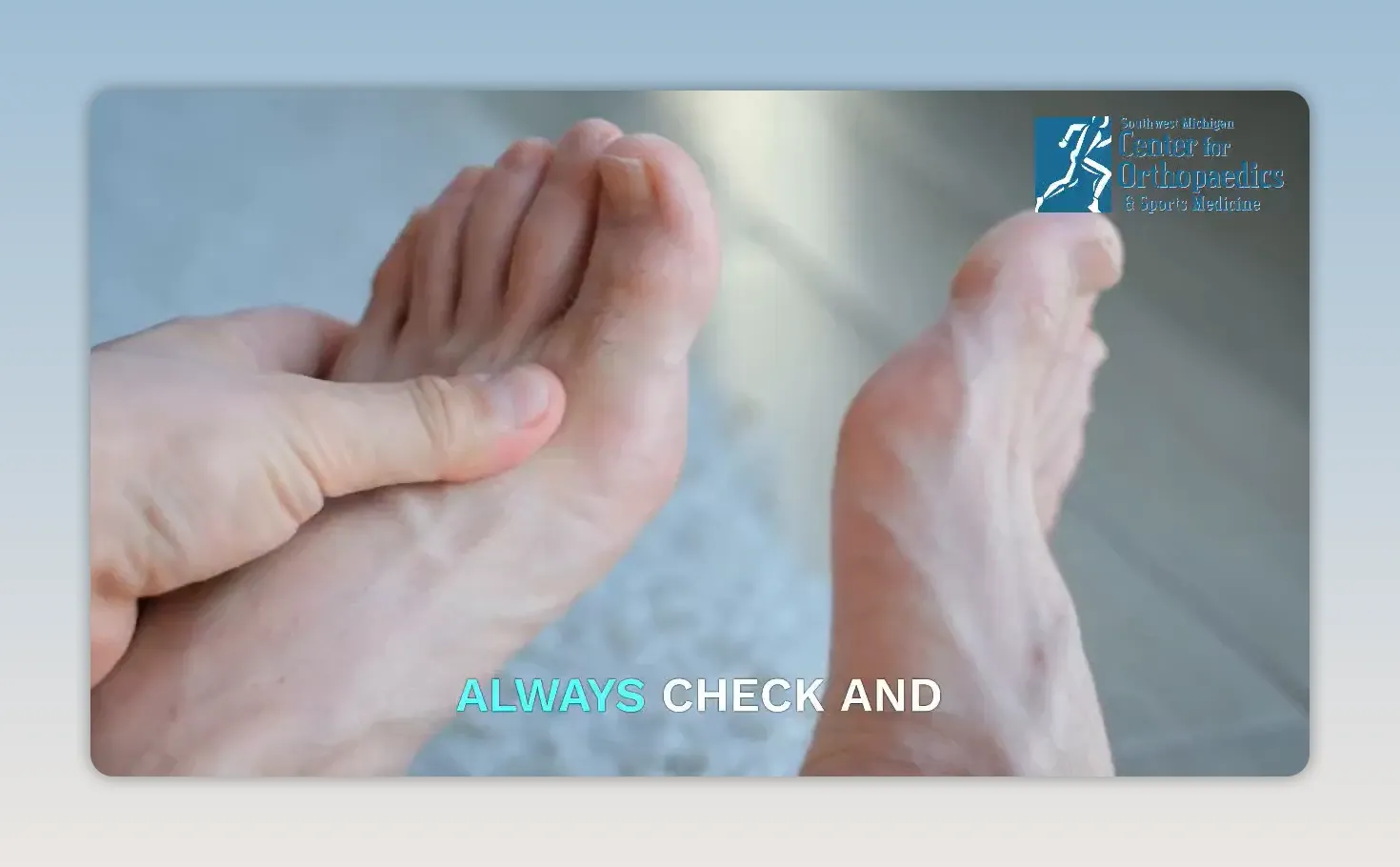
Check the skin carefully around the injured area. A wound that may seem minor should not be ignored when it is near a suspected broken bone. These injuries may require antibiotics to help prevent infection, along with prompt fracture evaluation and treatment.
For injuries involving a possible open fracture, dislocation, or traumatic orthopedic injury, learn more about fracture and trauma care.
2. Numbness or Tingling After a Fracture
Numbness and tingling are another emergency sign. These sensations can indicate a possible nerve injury associated with the fracture.
A fracture can affect more than bone. Nearby nerves may be stretched, compressed, or injured during the trauma. If an injured arm, hand, leg, foot, or other area becomes numb or tingles, it should be evaluated emergently.
Do not assume that altered sensation is simply part of the pain or swelling. Reach out to one of our Orthopedic Surgeons so they can assess whether the injury is affecting nerve function and determine the next steps quickly.
3. Changes in Color or Coldness in the Limb
Pay close attention to the appearance and temperature of the limb below the injury. A change in color or unusual coldness can suggest a blood-flow problem.
Blood vessels can be affected by a fracture, particularly when the bone is displaced or the injury involves substantial trauma. A limb that looks different in color or feels cold compared with the opposite side needs to be checked soon.
This is not a symptom to wait out. Circulation is essential to the health of the tissues below the injury, and a possible blood-flow problem requires urgent evaluation.
A Quick Emergency Checklist for a Suspected Broken Bone
Seek urgent or emergent care when a suspected fracture involves any of the following:
- Bone visible through the skin or a bone that has poked through the skin
- A small hole, puncture, or abrasion over the fracture site
- Numbness or tingling in the affected limb
- Color changes in the limb
- Coldness in the limb compared with the other side
Why These Signs Matter
Fractures can involve infection risk, nerve injury, and circulation problems, not just a broken bone. The purpose of urgent evaluation is to identify and address these complications as soon as possible.
One of our Orthopedic Surgeons can evaluate the fracture and the surrounding tissues, including the skin, nerves, and blood supply. When any of these warning signs are present, timely care is especially important.
To schedule your appointment, follow this link.