
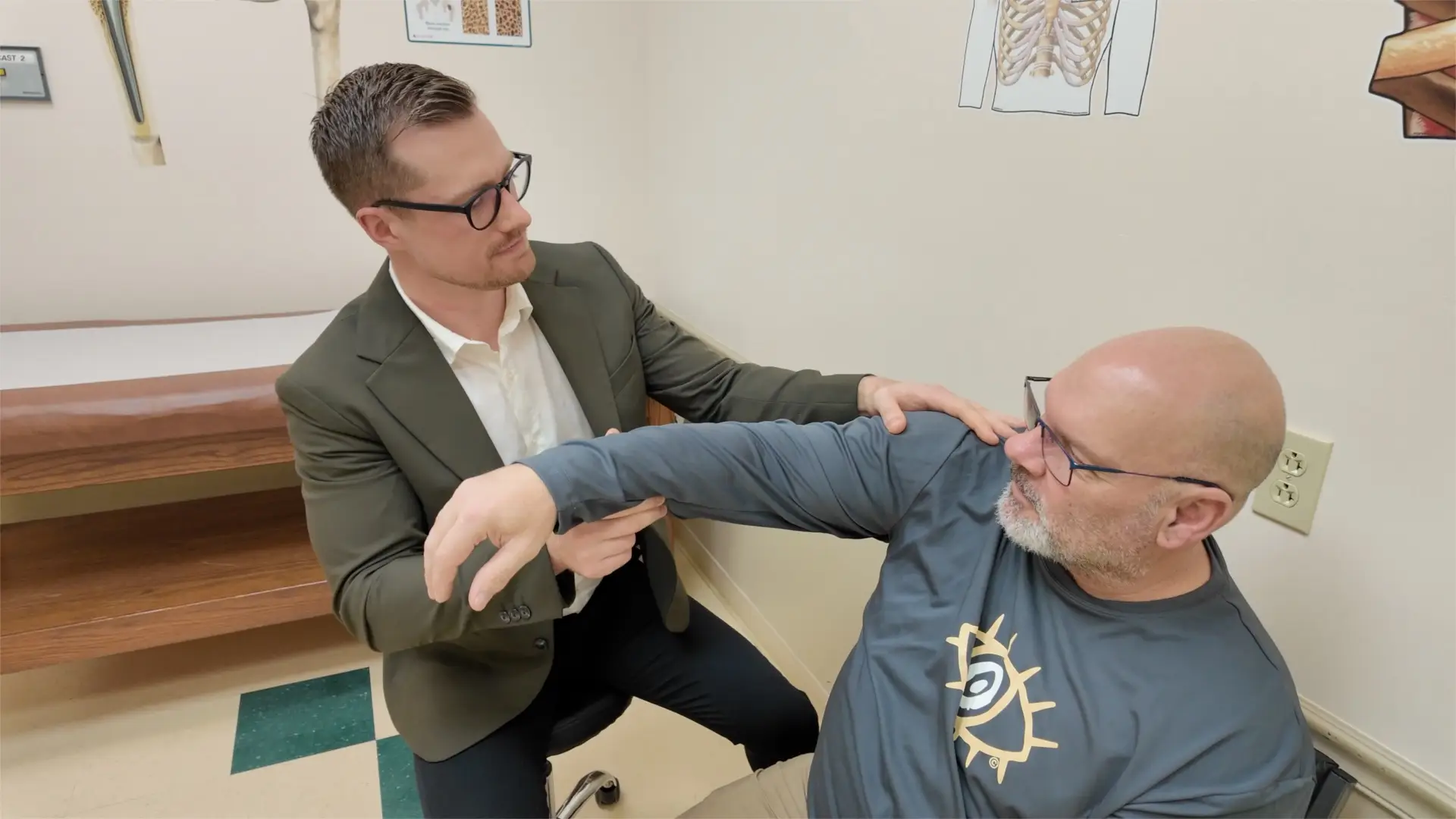
Rebuilding Strength After a Wrist Fracture and Rotator Cuff Tear –
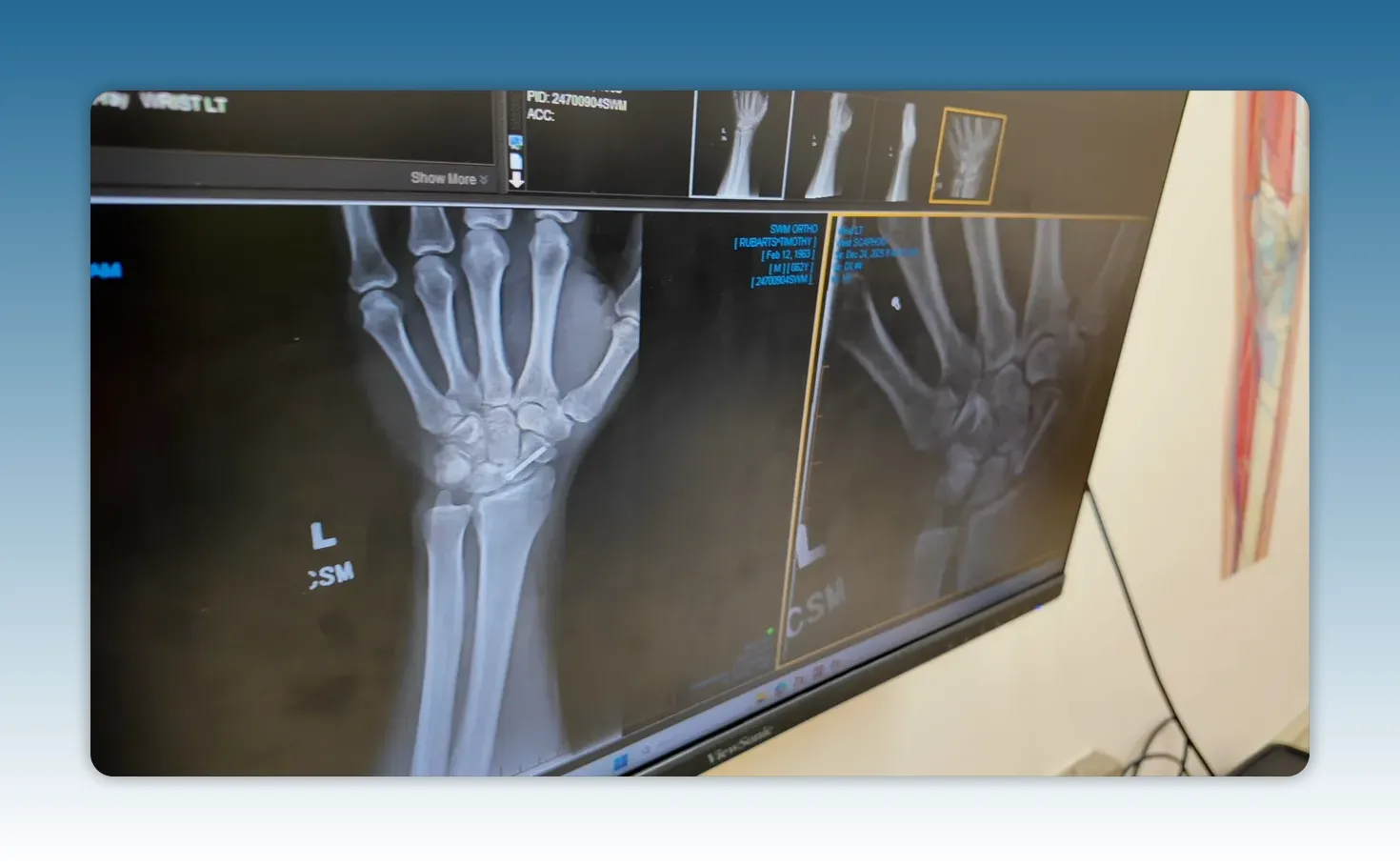
A serious fall can change everything in a matter of seconds. For Timothy Rubarts, a construction worker from Decatur, Michigan, missing a step off his truck led to a fall of roughly 10 feet onto concrete. He landed on his chest and shoulder, with one arm trapped beneath the other. The impact fractured his wrist and caused a complete rotator cuff tear.
Timothy’s recovery became a long process involving surgery, protection, range-of-motion work, and a gradual return to strength. In this video, see how the support of Southwest Michigan Center for Orthopaedics & Sports Medicine’s Dr. Josiah Valk, DO, clinical staff, and rehabilitation providers, helped Timothy move from a painful injury to meaningful progress.
A Fall That Caused Two Major Injuries
Timothy knew right away that something was wrong. After falling from the steps, he hit the concrete hard, striking his chest, shoulder, wrist, and head. His wrist was likely injured when it was pinned underneath his other arm during the fall.The accident resulted in two separate problems that both needed attention:
- A fractured wrist
- A completely torn rotator cuff in the shoulder
Falls from height can involve more than one injury, which is why prompt evaluation matters. For anyone dealing with a suspected fracture after a major fall, it is helpful to understand when a broken bone may require emergency care. Timothy described the whole experience as a long haul, but he also emphasized how supported he felt throughout it. The care team at Southwest Michigan Center for Orthopaedics & Sports Medicine helped him through each stage rather than treating the injuries as isolated events.
Repairing a Completely Torn Rotator Cuff
By the time the shoulder procedure took place, the torn rotator cuff had pulled farther away from where it needed to attach. A complete tear can retract when it is not repaired immediately, making the procedure more involved. Timothy explained that the tendon had to be brought back into position and secured to the bone. SWM Ortho’s Dr. Josiah Valk, DO, used five anchors with sutures to hold the repaired tissue in place. The surgery took a little more than two hours. Most important to Timothy was that the process was explained clearly. He felt that nothing was hidden and that he was given a direct explanation of what the injury involved, what surgery would require, and what the next steps would be.That honest conversation created confidence.
Timothy wanted straightforward answers, and he felt his orthopaedic surgeon gave them to him.
Recovery Happens in Stages.
After the rotator cuff repair, Timothy wore a sling for approximately six to eight weeks. From there, he began gradually weaning out of it and focusing on restoring movement. His recovery followed a clear progression:
- Protect the repair. The sling limited stress on the healing shoulder.
- Restore range of motion. Early recovery centered on carefully regaining movement.
- Build strength. Once the shoulder was ready, the next phase was strengthening the muscles around the repaired area.
Timothy was still working on range of motion and preparing to begin strength training. That step-by-step approach reflects the importance of patience after a major shoulder repair. Our Orthopedic Surgeons and rehabilitation team can guide the timing of each phase based on healing and function.
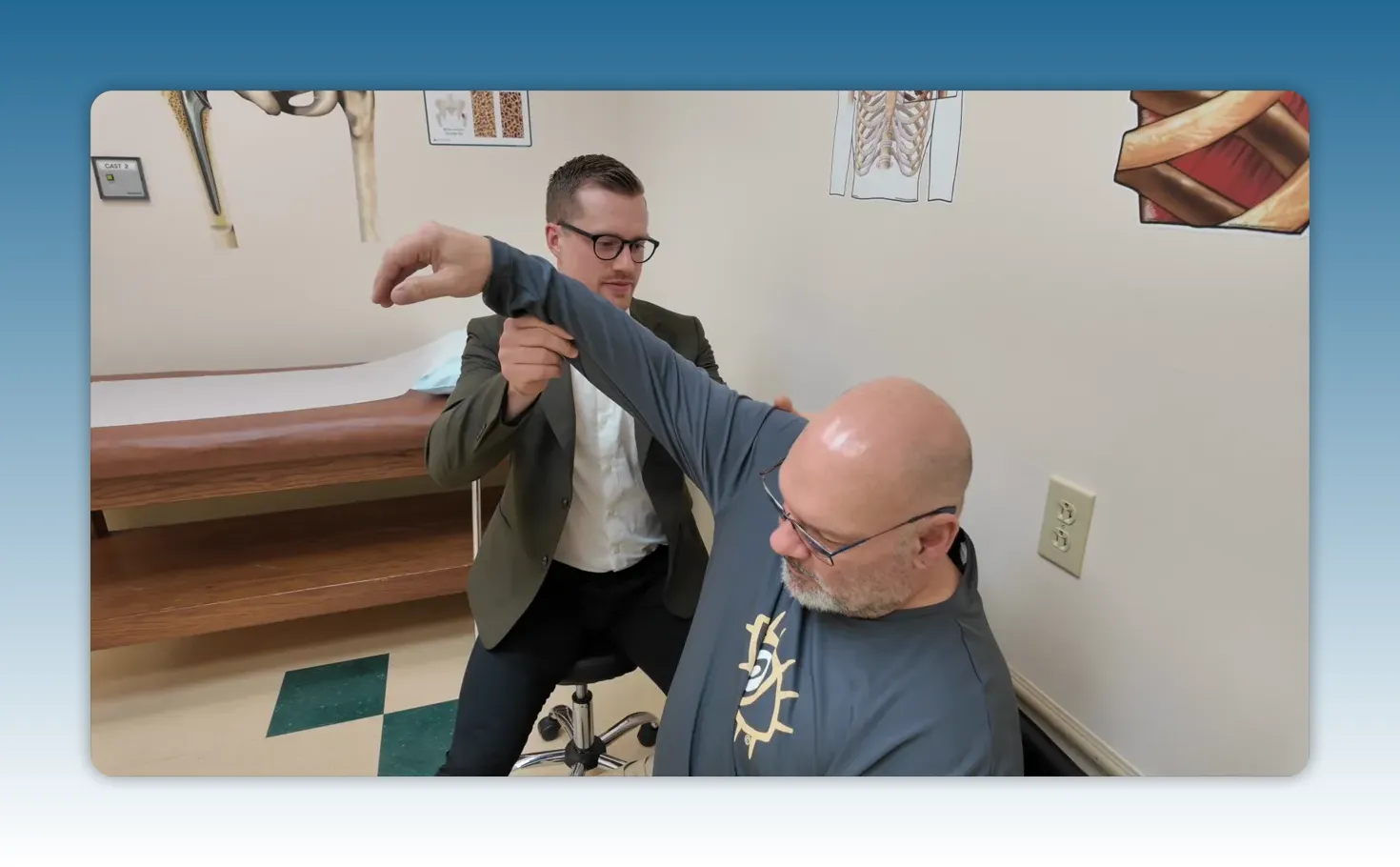 Rehabilitation is a key part of rebuilding confidence and function after surgery. The physical therapy services at Southwest Michigan Center for Orthopaedics & Sports Medicine provide coordinated care for orthopedic rehabilitation, including postoperative recovery and return-to-activity training.
Support Matters Throughout Orthopedic Recovery
For Timothy, the experience was not only about the procedure. It was about the people helping him through a difficult recovery. He described Dr. Valk as open, honest, and direct, and he praised the other physicians, nurses, and staff for being friendly, helpful, and supportive. That kind of communication can make a major difference when recovery feels overwhelming. A patient needs to understand what happened, why the treatment plan is structured a certain way, and what progress can realistically look like. Timothy says his appreciation came from feeling informed, treated with respect, and supported through the wrist repair, shoulder surgery, sling period, and rehabilitation.
Progress Starts With a Clear Plan
A wrist fracture and a torn rotator cuff are significant injuries, especially when they happen together. Timothy’s experience shows why treatment may need to happen in a specific order and why recovery cannot be rushed. With a thoughtful plan from a Southwest Michigan Center for Orthopaedics & Sports Medicine Orthopedic Surgeon, a repair designed for the injury, and consistent rehabilitation, progress can continue one stage at a time. Timothy’s path has been demanding, but he has moved from injury and uncertainty toward restored motion, upcoming strength work, and greater confidence in the road ahead.
For patients preparing for an orthopedic appointment, our about your visit page offers practical guidance on what to expect when seeking care.
Contact Our Team of Orthopedic Surgeons |
|
Southwest Michigan Center for Orthopaedics & Sports Medicine |
| Schedule Your Consultation |